The Routeburn Trek in Fjordland National Park is considered one of the “Great Walks” of New Zealand. It involves three days and two nights on the trail. Mike and I walked it as part of a guided tour with Ultimate Hikes. The scenery was spectacular and we had spectacularly bad weather. We walked – or tramped, as the Kiwis say – through rain, snow, hail and gale force winds. And it was still stunning.

We showed up at the Ultimate Hikes Center in Queenstown for our pre-trek briefing and listened with increasingly sweaty palms as a perky, young woman told us how much we were going to enjoy the trek – even in the bad weather that was forecast. Prepare for the rain and cold, she advised. Hmmmm. It was the middle of the summer in New Zealand and the day had been beautiful and sunny. It couldn’t be THAT bad – could it?
 With borrowed backpacks and rain slickers, we showed up at the crack of dawn the next day. We met the others we’d be hiking with – 24 in all – and boarded the bus to the starting point of the trek outside of Te Anau. Buckled up and strapped into our backpacks that suddenly felt heavier than they had the night before, Mike and I dropped into line behind the guides – Hillary, Gina and Masa (our Japanese speaking guide), and off we went. This would be Mike’s first overnight hike carrying a backpack – and he was doing it through the mountains of New Zealand.
  Lucky guy….although I’m not sure he always saw it that way even though he never once complained!
The entire first day, we hiked, gradually climbing, through mountain rainforests. A light mist hung in the air and the sky was overcast. There would be no mountain views that day, but it was okay as the trees stole the show. The trees – small and huge – were completely encased in green moss and lichens. Rocks were blanketed with green and the ground between the trees was a mass of ferns. One of the women said it was like walking inside a terrarium. For me, it felt like fairy land. Any moment, I expected to round a bend and surprise a flock of fairies (do fairies run in flocks?) hovering in the ferns and moss.
 Once we left the roadway behind, the forest was surprisingly quiet. Every so often, the chirp or twitter of a bird would sparkle in the distance. New Zealand is working to rejuvenate its native bird population which was decimated by non-native predators like cats and stoats (small, vicious weasel-like animals). Consequently, there is not an abundance of birds. Each sighting was a highlight. We walked along trying to take it all in. Photos don’t come close to capturing the moist, magical greenness that was everywhere. The air was so refreshing that I simply wanted to breathe deeply and clean out all the staleness inside. We walked past small waterfalls that had sprung up with the recent rains, and we scampered through the spray of a large waterfall tumbling down the mountainside.
  The only sounds were of hiking poles clicking against rocks, the distance rush of falling water, and the occasional drip of water dropping from moss and fern. It was beautiful, the pack was heavy and we were excited to see the lodge late that afternoon.
That’s when we discovered one of the big benefits of a guided hike. The tour company provided and staffed the lodge with two happy people who welcomed us to the glass-fronted lodge with drinks and snacks. We were assigned a room with a Japanese couple who were part of the Japanese tour group that was hiking with us. They were nice and unbelievably quiet. There was not a lot of pillow talk that night or the next!
 The lodge had hand washing facilities and even a drying room so that our hiking clothes were refreshed the next morning. A hot shower did wonders, not to mention the glass of wine. Dinner was hot – baked chicken and veggies – and freshly prepared. Food and supplies are flown in by helicopter. After dinner, the guides prepared us for the next day. We gave them our food order for breakfast. Everyone but the Australians had to translate. The first breakfast option was porridge. Mike and I exchanged puzzled looks until we realized that porridge was oatmeal. The next option was Eggs Benedict. We all laughed as we watched Masa explain Eggs Benedict to the Japanese group. He held out his hand and pantomimed an English muffin with a flurry of Japanese in between. After that, the guides gave a presentation on the next day’s hike. Despite their best attempts to assure us how great it would be in any weather, there was bad news.
  The weather was getting worse. Already rain was starting to fall and the wind was picking up. I confess to feeling some trepidation. Those feelings didn’t let up as the wind howled ferociously throughout the night. In fact, the guides delayed our start the next morning due to high winds. But, finally, it was time to set off. Mike read the weather forecast before we left. It read, “Heavy rain, hail, snow at lower altitudes, periodic gale force winds; becoming fine.” Becoming fine?
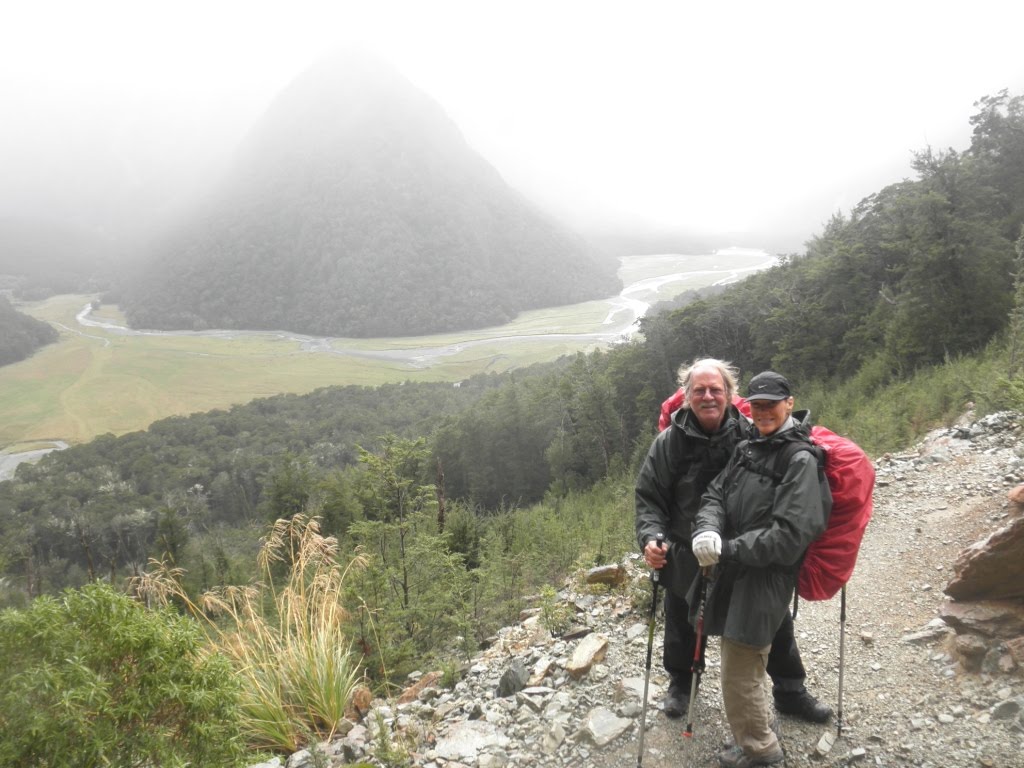
With all of our layers of clothes on (I felt like I was wearing everything but my PJs), rain coat and hood in place, rain cover on the backpack, and gloves, we started on our all day hike along a high mountain ridge.
 Walking in the rain, we climbed rocky boulders through the rain forest until we cleared the tree line to emerge on the mountain side covered with low, golden grasses.
  The views were obscured by clouds so we pressed on. The rain continued as we climbed making the trail like a river coursing around slivered blue rocks that glistened in the rain. I was hiking in my trail running shoes which are mostly mesh. Consequently, I was stepping stone to stone along the trail as though it were a stream crossing. Nonetheless, it wasn’t long before my feet were soaked through. We climbed slowly and the rain became slush and then snow and hail. Mike was such a trooper. He kept hiking as the wind blew the hail into our face with stinging, prickly barbs. I was fighting the hood on my raincoat to keep it in place but still be able to see out. We kept looking at the sky watching for it to “become fine.”
 Most of the group was ahead of us and we found ourselves alone on the mountain side. A stiff wind blew up that tried to toss my backpack around. The trail was exposed with ghosts of distant mountains visible across the valley. Even so – they were beautiful, high peaks. Finally, we reached the hut where the rest of the group was already gathered for a very welcome lunch. The afternoon was more of the same as we cleared the highest point on the trail at about 4000'. The clouds lifted a little as the hail became a fine mist.
  Waterfalls, mountain lakes, and newly snow-dusted peaks made us pause and stare – even if the rain was pelting and water running over already wet feet. The weather still was not becoming fine. Hillary pointed out tiny carnivorous plants with sticky finger to catch bugs – their only source of nourishment in this harsh, mountain environment. We finally made it to the next lodge where the operators handed us a warm towel.
  It was a very welcome gift! We were told later that this weather was the worse they had experienced since Christmas. But, Hillary added, if you’re going to have bad weather it’s better to have “proper” bad weather than just a mist. She agreed that we’d had “properly” bad weather.
 Another warm shower, washed clothes and glass of wine made the wet, cold day take on a remarkable shimmer of accomplishment. The difficulties were quickly forgotten. Dinner was great – grilled salmon – and dessert was pancakes. The pancakes had history. The original owner of the hiking company and the man who first built a lodge at this site apparently became frustrated with unruly hikers who impatiently wanted their pancakes. Out of frustration, he threw the pancakes at them. The tradition continues today. The guides made pancakes and while still hot in the skillet threw them overhead to a hiker with a plate.
  The trick was to catch the pancake without dropping it. Shockingly, I caught my pancake between my plate and my shoulder. Mike, however, was not so lucky. He jumped and dodged but missed the pancake. No worries – he ate it anyway –
 with the assortment of toppings (peaches, bananas, whipped crème, chocolate, and syrup) provided.
The last day was still drizzling but it seemed to be becoming fine. The day was spent hiking downhill over rocks and along an easy gravel path through more forests. Birds flitted past too quickly to identify. It was a pleasant walk and the heavy trees kept the rain off so that we no longer needed hoods and heavy clothes. Thankfully. By noon, the final hut was in view. With a tremendous sigh of relief, the backpack was removed. It is amazing how good that feels.
 We sat in the sun – (it had finally become fine) – and ate our sandwiches. As we ate the Japanese group walked up the trail to the hut. Our roomies came rushing forward repeating – “roommates!” They wanted their picture with us! It was so cute.
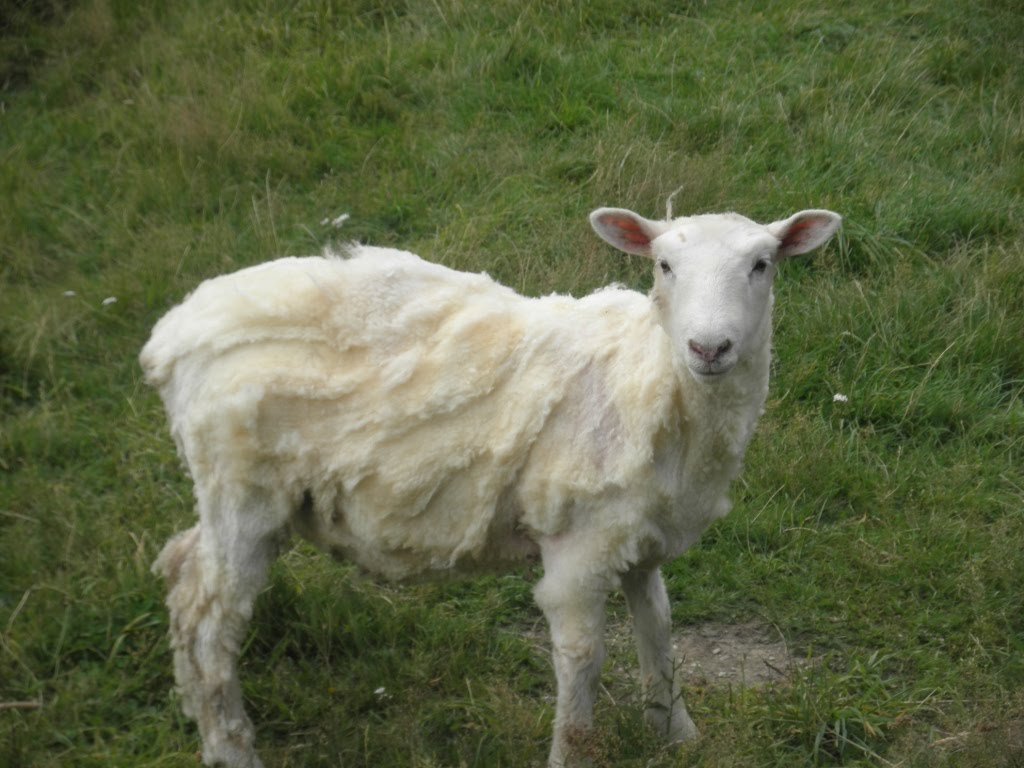
 We snoozed on the bus back into town with a short stop in Glenorchy for a celebratory drink, French fries, and presentation of certificates. It was a festive time in a country pub, but everyone was ready to be back and take a shower. We met so many nice people in our group. Kathy and Erik from Minnesota were the only other Americans. There was a group from Australia, the tour group from Japan, and a couple of blokes, Mick and Peter, who were sheep and dairy ranchers in Australia. We shared good laughs with them and swapped sheep stories – now that we were experience sheep shearers!
 I loved the peace and quiet of the mountains and the stunning scenery along the Routeburn Track. I’m glad to have the chance to experience the wildness of New Zealand, the magic of the rainforest, and the craggy mountain tops. And I’m glad to have done it with Michael. We’ll always have this memory together as our last event before returning to the U.S. Now, we turn our attention toward home with mixed emotions. But, you know - it’s becoming fine.